Categories
Articles Press

The Age of Monologues

A short essay I wrote on Pinter, monologues and power, published in The New Yorker, March 6th 2015

In 1973, the BBC first broadcast a Harold Pinter play called “Monologue,” in which a man speaks for twenty minutes to an empty chair. It is a superficially casual address to an absent friend with whom, we gather, he shared a lover. Or, more likely, to whom he lost a lover. Beneath the surface gloss, the mood is spiked and bitter, and as the monologue unfolds the man looks more and more like someone flailing at sea.

Read the essay
http://www.newyorker.com/wp-content/uploads/2015/03/Harvey-Monologues-and-Political-Discourse-320.jpg
Categories
Interviews Press

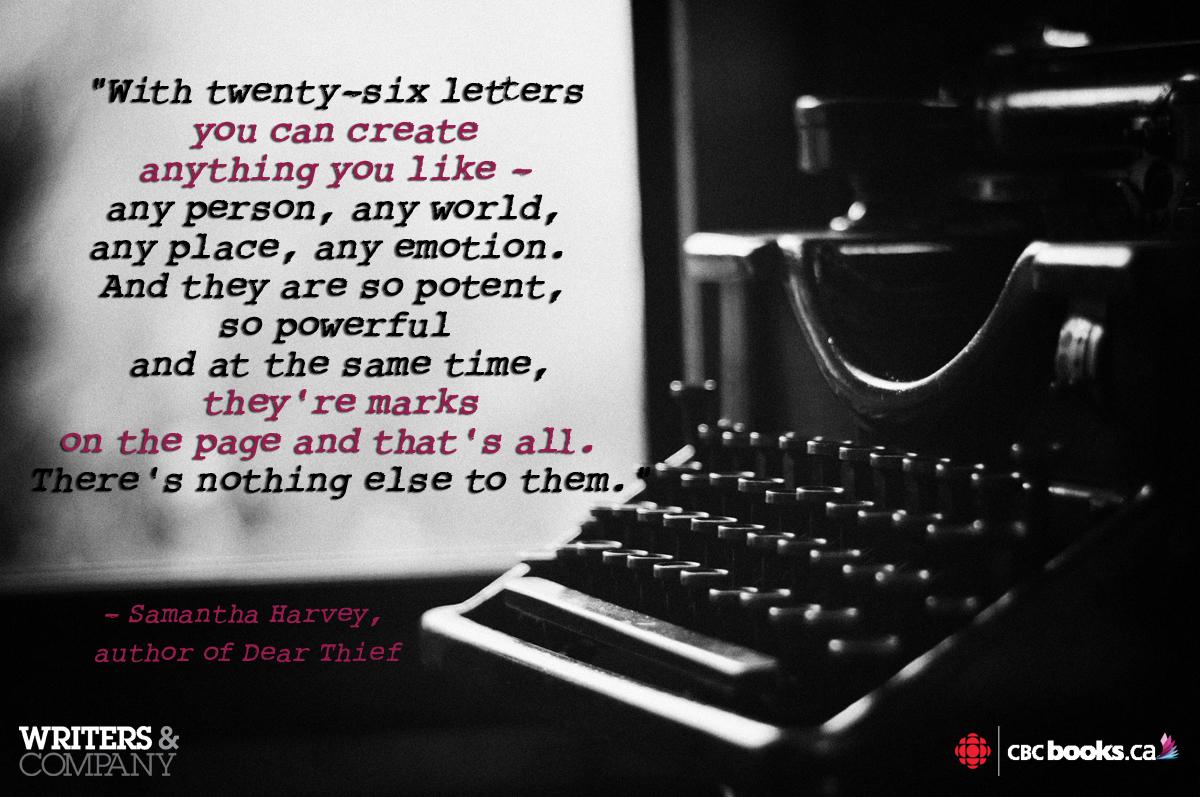
Radio interview with CBC’s Writers and Company

On 1st February I had the privilege of being interviewed by Eleanor Wachtel for CBC’s ‘Writer’s and Company’, and we discussed naked bodies, letters, Leonard Cohen, Socrates, Lithuanian forests, the power of words, my mum, and death, a little.

CBC Interview

Embedded image permalink

Categories
Interviews Press

Interview with Salon Magazine

“We don’t always have to write about women in the context of their relationships with men”
Categories
Articles Press

Essay for The Daily Beast

My, my, my

A short essay I wrote for The Daily Beast about the perils of being possessive

My sister is my sister regardless, has always been and always will be and has no choice about it. This is a love quite distinct from that of a lover, with whom we fall in love, in part, because they are free and have a choice. We generally don’t fall in love with unfree things in the same way. It’s a love so very unlike the love of a shoe.

Read the essay
Categories
Press

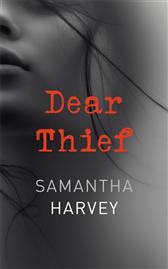
Publication of ‘Dear Thief’, 25th September 2014

9780224101721-large“Samantha Harvey’s Dear Thief is a novel of profound beauty.”  Michael Cunningham

“A glorious, sensuous, grown-up novel, intelligent and passionate.”  Tessa Hadley

“Dear Thief is a hypnotic beautiful and sometimes dark incantation–a letter to an old friend that lures the reader in and doesn’t let go. Samantha Harvey’s novel is a deftly drawn reminder of our deeply human desire for connection and the risk involved in the revelation of that desire.”
A.M. Homes

In the middle of a winter’s night, a woman wraps herself in a blanket, picks up a pen and starts writing to an estranged friend. In answer to a question you asked a long time ago, she writes, and so begins a letter that calls up a shared past both women have preferred to forget.

Without knowing if her friend, Butterfly, is even alive or dead, she writes night after night – a letter of friendship that turns into something more revealing and recriminating. By turns a belated outlet of rage, an act of self-defence, and an offering of forgiveness, the letter revisits a betrayal that happened a decade and a half before, and dissects what is left of a friendship caught between the forces of hatred and love.

The thoughtfulness, intensity and sheer beauty of her writing in her first two novels, The Wilderness and All Is Song, brought Samantha Harvey both huge acclaim and many prize shortlistings. Those readers who loved those novels will fall on Dear Thief with relief and delight.

“‘Dear Thief’ is a beautiful, tentative success, a novel with no interest in conformity. Harvey’s book is propelled not by the usual structures of novel writing but by the quality of its author’s mind, by the luminousness of her prose, and by an ardent innocence of speculation that is rare in contemporary fiction . . . Even as it tells its tale of determinism and fatality, this remarkable novel asserts its own curious freedoms. ” James Wood, The New Yorker
“Harvey’s innovations electrify every word . . . a heady, elegiac combination of eroticism and loss, loathing and rapture.” The Guardian

“Quite simply ravishing . . . Harvey offers an incandescent vision of hope and acceptance.” The Telegraph

“Harvey’s writing is stunning, an effortless spool that winds back the layers.” The Sunday Times

Categories
Press

Radio 4 ‘Skylines’

Short story: African Beauty

You can listen here to my story, ‘African Beauty’, written for Radio 4 as part of their Skylines series – aired on Friday 20th June at 15.45

Categories
Articles

Granta: Three Japanese Books

I was asked by Granta to write a short piece about a Japanese book I admire – I chose ‘Snow Country ‘by Yasunari Kawabata, a book I read a decade ago while living in Japan.

I’ve loved this novel for many years. It is a romance without any romance and a love story without much love. Quietly, quietly (with language that seems so fragile), it dismantles the things we hope for. Is beauty a thing that lasts? No, it’s a thing that wastes and decays. Will romantic love fulfil us? No, not really; we can never escape ourselves enough to give another the love they want. Don’t we, at least, belong to a glorious natural world? Again, not really; even as we admire its glory we find ourselves separate from it.

Snow Country takes place in a hot spring resort somewhere in the western mountains of the Japanese mainland . . .

Read the article
Categories
Articles

Writing to . . . write?

Tim Parks has made me think, with his article ‘Writing to Win’ in the New York Review of Books. The gist of the article (though you should read it for its insight) is that the withering impatience we have for unpublished writers transforms into unconditional high regard once those same people are published. ‘All at once,’ he says, ‘you’re being listened to with attention, you’re on stage at literary festivals, you’re under the spotlight at evening readings, being invited to be wise and solemn, to condemn this and applaud that, to speak of your next novel as a project of considerable significance, or indeed to pontificate on the future of the novel in general, or the future of civilization.’


This isn’t the case for all published writers, but he’s absolutely right that it’s the case for some. It’s a surreal transformation, from the inward and inconsequential process of writing a novel in total obscurity, to the gregarious, weighty business of speaking about what is now your work of art, your comment on existence. One moment you are as dismissible as a feather, the next you have gravitas; the broadsheets want to know what you are thinking. Your thoughts used to be a congested, erratic, self-referencing mash of half-baked opinion, now they apparently matter, and you, yourself, seem to matter too. The Guardian asks you to say what you think about the state of dementia care today. Radio 4 wants your comment on the world this week, a stranger at a book talk is interested in what drives you as a human being, and by some miracle you acquire credibility, not just as a writer but as a person. ‘Neophytes are rarely unhappy with this,’ Parks says, and it’s true. (Though there’s always the slicing worry: when will they notice? When will they notice that I’m actually just me?)


But I’m interested in what Parks says about this culture of winning, where being published is, to the unpublished writer, the ultimate prize. I think that’s because we perceive, writers and public alike, that there is a club to which writers must belong, the feted published club, and there is a key to it. Once over the threshold we are in and we are kingly, credible and sanctioned. With impunity we can put ‘Author’ on any form that asks for our job title and it’s done, a relief: the line is crossed.


I felt like that when I first heard I was going to be published – downright relieved. Thank God, I’ve crossed the line. But what happens once in? I remember talking to a fellow author a couple of years ago, on a train back from a literature festival – he said he often felt his job was akin to that of a racehorse, that he needed to become a championship writer, and if he didn’t he would have in some sense failed. I have felt this too – it’s not enough to be a good writer, even a great writer, I must be a prize writer. When Parks asks: ‘Why do we have this uncritical reverence for the published writer?’ I would say that, from within the club, there is anything but uncritical reverence. It’s a hard, scathingly critical world of hierarchies, random fortune, popularity contests, and all-round vulnerability, which is – Parks is right – about winning, or nearly-winning, and more often losing, or losing out. Though of course we’re not really allowed to disclose our preoccupation with winning, but instead to celebrate our place in a collective success story and to stand with brotherly big-heartedness amongst other writers.


A lot of that fraternity is genuine too, and I have met some of the most brilliant people in writing circles. I also meet equally brilliant people among my students, and it never escapes my attention that the people I teach this year might be ahead of me on a shortlist next year.  Nor would I prefer to be unpublished, obviously; I’ve come to rely on that sanction to a degree. It remains a persistent question for me, though, about how to maintain my own sense of professional worth. So much of what is written and said about books and writers (and, actually, everything) is hot air, and so many judgements of worth are arbitrary to the point of being meaningless. I hasten to add that I have never felt that hot air and arbitrariness more than when I was in the spotlight and on prize shortlists myself. If we are not winning, what are we? And if we are winning, what are we?


I am beginning tentative research for a new novel at the moment and I find myself putting down ideas, and then instantly hearing a chorus of naysayers on Saturday Review. Harvey fails to convince us of this world. Harvey’s premise is contrived, her characterisation is puppetry, her mind inadequate, her being fraudulent. I take up my pen again (it had fallen from my hand in dismay) and think: Regardless, I’ll carry on. There has to be a reason for it all beyond validation and winning, at least for those like me who lack the killer instinct, and that reason has to be a kind of love for the process. It has to flourish in a crack between doubt and arrogance. In my experience there is as much art and craft in learning how to write expansively from this small space as there is art and craft to writing itself. Winning is the bit that is not in your hands, and you can’t be concerned with it. It will happen, or it won’t – that’s all. It’s an obvious truth, I know, but we must write to write, not write to win, be we published or not.

Categories
Articles

The Folio Prize

As a member of the Academy for the Folio Prize – a new prize that honours books written in English, but from anywhere in the world – I was asked recently to say which book I think should have won this prize, had it existed when the book first came out.

An almost impossible task, and maybe I was supposed to choose an otherwise little-known work. But I chose Brief Interviews With Hideous Men by David Foster Wallace, on the grounds that it is simply genius. And didn’t win any prizes.

I was thinking about books that have pushed out a boundary in literature, because this is the feat worth celebrating – when you read a book and think, I did not know it was possible to do that with words. With this in mind I boiled my choice down to either Mrs Dalloway or Brief Interviews, neither of which have exactly escaped attention, but both of which have done something genuinely new. Read more . . .

Categories
Articles

Granta – ‘Betrayal’ Issue

Granta Betrayal, launched January 2013, includes my short story ‘Flowers Appear On The Earth’.

The story is set on the fictional island of Tre, which lies off the southwest tip of England, and is about the aftermath of an explosion in the island’s chemical dye factory.

‘Five weeks after the disaster at the end of July, the islanders trooped from the church of St Helene to the eastern promontory. At the front of the cortège was the vicar and those carrying urns. These men and women tucked the urns in the crooks of their arms, or held them with both hands, solicitous and anxious, or clasped them to their chests. Behind those the rest of the islanders, who carried bouquets and spades. At the back, the small party of cameramen and journalists for whom the island’s acrid smell was new and who could be seen now and again flinching where it collected in sheltered dips. Their track followed a gentle descent along the southern edge of the island . . . ‘

(Alas, you will have to buy or borrow the Granta issue to read more.)

The issue features writing by, amongst others, Mohsin Hamid, Janine di Giovanni, John Burnside and a brilliant short story by Colin Robinson.